This is a phrase I’ve probably yelled a thousand times to the distance runners I’ve coached over the years. I might add “elbows through!” if I thought I really had their attention. The fewer words you use that reach brains in ways that change bodies, the better. These really did seem to work. They still do for me now that the only runner I’m coaching is me.
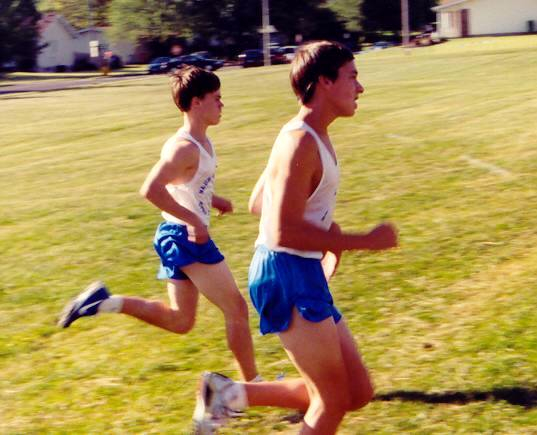
Photo from SLUH XC archives
As a coach I believed in teaching running form. Many coaches don’t and they aren’t necessarily wrong. Unless you’re really willing to commit to it and build a lot of conceptual and drill support for helping runners actually improve, you might as well leave it alone. You could do more harm than good and even end up injuring an athlete.
I feel the same way about the “barefoot craze” sweeping the running world. I’ve read Born to Run. It made quite an impact on me, even after 27 years of coaching and, in fact, of teaching most of the mechanical principals author Chris McDougall advocates. But he did send my thinking to the next level in terms of how essential the forefoot strike really is and how active the whole foot ought to be on every stride. “Run light!” is great advice.
After about two years of really working on engaging the foot and staying on on the forefoot–I was always a forefoot striker most of the time– I can run 8 miles at a decent clip and almost never pound the pavement.
Photo by skeletonheb
But what if you are a heel striker or just a runner who runs and doesn’t think all that much about what your feet are doing? Should you try to get up on your toes and take off your shoes? Or perhaps just trade in your conventional trainers for one of the new “minimal” shoes?
I’d say the answer is a flat “no.” If you are into this stuff a bit, or if you are interested is seeing what a good, balanced, well-researched and reasoned piece of writing on any topic looks like, take a look at the recent NYT piece here.
It not only explains my answer but is one more example of the ever-present human temptation of being sucked in to the posture of “evangelistic faith” in a bold or simple truth when the actual truth, though there in the flesh and blood of experience, is complex, difficult to absorb and to apply.
I had a chance to spend a few days in New Orleans recently.
New Orleans Skyline (Photo credit: joseph a)
Rode clattering, unpretentious streetcars from the Garden District to the Quarter every day.
Photo James Burton
Had meals in six or so restaurants, each place its own funky or elegant world of a few square feet 10 paces from the world next door I’d never see, each dish served so hot and well-seasoned it didn’t matter how much food was on the plate. I was chewing slowly and savoring every bite because I couldn’t help it, not because it was good for me.
We walked the along the low-slung strip of Frenchman Street north of the Quarter, ducking into clubs where joyful brass arpeggios and bluesy guitar licks flowed around us and out to the sidewalk as naturally–and plentifully–as the rivers of bourbon and beer.
In short, we had a really great time. Part of it was how much I needed the break. Part of it, of course, was the utterly unique and constantly surprising flavor of NOLA. Part of it was the company of my wonderful companion.
But even with all of the pleasures, textures, endlessly engaging distractions and requisite tourist activities (yes, we had beignets and coffee at the Cafe Du Monde) to keep me occupied in the Big Easy, I still found myself, underneath it all, being drawn into territory that often engages me most when I travel: the drama of how human communities establish themselves on a natural landscape. Driving the interstate I am moved by fields, farms and pastures. I think about them. In New Orleans, I thought a lot about water.
So we took a swamp tour.
The folks at Cajun Encounters picked us up in the Quarter and, after collecting passengers at a few irresistibly quirky and cool small hotels and B and B’s, drove us out across the I-10 bridge south toward the bayou. The lower 9th Ward was too far off to the west to really get a sense of it at ground level, but as we passed through West Lake Forest we saw mile after mile of abandoned shopping centers, upscale suburban tracts and business parks. The devastating aftermath of Katrina was still in evidence at a scale I couldn’t absorb. Some neighborhoods were trying to come back. The Home Depots and Lowes were certainly up and running; our tour guide and bus driver made sure to point that out.
Image at Collin Kelly: Modern Confessional Blog
Then it was out across the Bayou Sauvage National Wildlife Refuge and into the town of Slidell where the tourists cue up at a boat launch on the Pearl river to see live gators, have a few close encounters with real Cajuns and experience the absolutely magical world of a silent Cypress-Tupelo swamp. Tourist trap or no I was completely entranced.
Photo James Burton
The Cajuns, descendants of the French “Acadians” from Canada who’d been kicked out of the old original settlement of New Orleans and had to invent a life for themselves in the swamps, exist on mighty close terms with their biological niche.
Photo James Burton
Our guide was second generation Cajun and though I could tell he wasn’t a “naturalist” at all by temperament, it was also clear that he was on intimate terms with the land, the water, the birds, the plants and the trees. He knew a lot about all of them and he wasn’t really showing it off. He was just talking about home.
He didn’t mention it at all on the tour, but his home is profoundly at risk.
—–
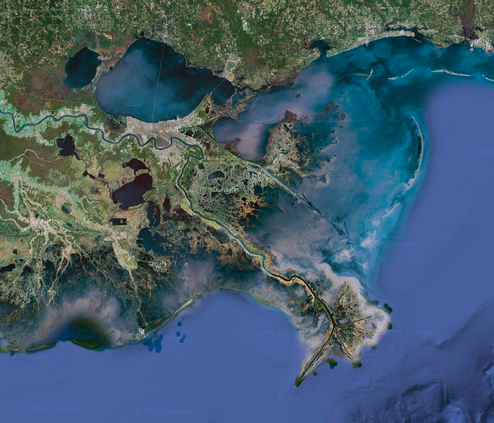
I remember the first time I traveled to New Orleans. I was in a high-powered choir and we had a gig at St. Louis Cathedral. I knew almost nothing about nature or geography, but I guess I was still hard-wired for interest in them because all I could think about as we drove south that night was: When would I see the first palm tree? Would we catch a glimpse of the gulf? Would I at least be able to smell the open sea? I did see palms eventually and was mesmerized by them. I never saw the Gulf, of course, because the land where the Mississippi meets the ocean is a vast maze of swampy islands, marshes and streams extending down about 130 miles before you reach open water. I think I would have been shocked if I’d looked at a map back then to see where New Orleans actually sits on the edge of all that swamp land.
By the time we got back in to the city, my reflections on this place were beginning to crystallize a bit.
There is, of course, no way to articulate something as complex and multi-layered as the unique culture–“the feel” for want of a better phrase–of a particular city. Cities, even the blandest and most homogenous, are worlds within worlds and everyone is entitled to their own inexpressible take on whatever slice makes it real for them.
Photo of Springfield, Mo, at Kevin Flynn's Inside Lane site
Nevertheless New Orleans is so special and unique that people across the country and around the world do seem to share common impressions and narratives about it. A German couple sat next to us for dinner one night. My partner struck up a conversation with them. At one point the gentleman said something like: “We come from a beautiful village in Austria and we’ve been to many places across Europe and America…but we’ve never been anywhere like this.” We were in the Quarter so part of their comment was surely a reference to the sheer number of restaurants and bars within 16 or so square blocks. But it’s not just the Quarter–and it certainly isn’t just Bourbon Street–that have made New Orleans into an urban symbol for so many Americans. How else can we account for it? Mardi Gras is a good place to start.
Photo at LA Times Photo Framework Site
I’ve never been in the city for the actual celebration of Mardi Gras, but for most visitors isn’t it always Mardis Gras in New Orleans? And wherever we are when Mardi Gras rolls around each year, don’t the beads, masks and fake plumage suggest that we are all pretending to be in New Orleans? It seems that Mardi Gras has expanded to become one of those second-tier national holidays–like St. Patrick’s Day– in recent years. It wasn’t like that 20 years ago. It’s a festival that invites us into riotous joy, into spontaneous and often excessive and irresponsible expressions of our passions. It celebrates diversity, too, implicitly tolerating almost every lifestyle.
Photo at NOLA Imports website
I think that approach to diversity is an important element of what makes New Orleans unique. Unlike San Francisco, for example, where you walk from one contained ethnic niche right into another in just a few steps, the cultural, musical, ethnic, even linguistic traditions of New Orleans taste intermingled like flavors in a gumbo: Cajun, Southern, French, Creole, Gay, Seafaring, River-boating, African, Haitian, Delta, even Cuban. And visitors have permission to try on any of the masks they wish.
I remember walking down Bourbon street when I was 20 on that choir trip I mentioned earlier. The mask I was being invited to try on that night, with rather aggressive invitations as I recall, was ‘the voyeur.’ I was a pretty straight arrow. I’d turned down the invitation to wear ‘the drunk’ mask earlier that night so I certainly wasn’t going to put the next one on, especially since I was already wearing ‘the seminarian’ mask. I wanted to, though. And a part of me certainly appreciates now that there is an intoxicating freedom in putting on these masks that can be a crucial part of how someone eventually works out being real. Though I’ve always felt responsible for representing the risk side of that equation, I don’t take any credit for that anymore.
On our recent visit, my wife and I saw packs of smooth-skinned 20 year-old guys walking down the middle of Bourbon street, wearing caps turned backward, leaning forward as they strode along, looking side to side as they considered invitations. They sure looked like they had their masks on.
Photo at dnjournal.com
Here are three other ingredients that I think contribute to the recipe for NOLA joy and celebration– ingredients in ample supply both in its history and its present circumstance that make it possible in very concrete ways:
The relatively low-tech, accessible, humanscale of development at which much of the city exists,
Photos James Burton
The intimate and celebrated connection the city has to its natural context: river, bayou, coastal flats,
Photo James Burton
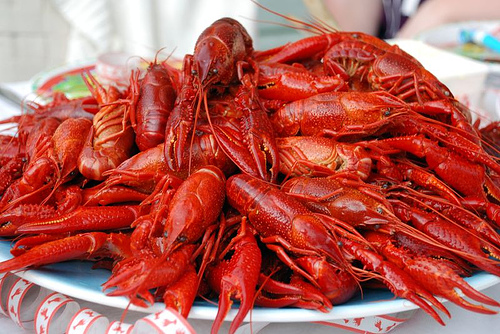
And the abundance of the celebrated, local, and mostly sustainable food resources gathered from this landscape.
Photo at Cloture Club Website: Annual Louisiana State Crawfish Boil
But finally, since it’s Lent and I am finishing this post up on Holy Thursday, I want to come back to what I saw on my way out to the swamp tour, to Katrina, to the dramatic threat facing not only the freshwater swamps but the entire city.
New Orleans looks worn out by its struggle to survive.
And it isn’t just Katrina. There have been waves of struggles against storms and floods since Bieneville established the city in 1718. Before that, this place was for human beings what it should be in an ecological sense: a portage between the swamp and Lake Poncetrain. Just as Mardi Gras would have no meaning without Lent, so the vibrant and outrageous culture of New Orleans can’t be separated from its relentless struggle for survival in vast, swampy lowlands. Geographically speaking the city makes no sense. From the viewpoint of logic and landscape, it should never have come to be at all. But as the path of biological evolution demonstrates, creating order from mistakes and accidents is the way more complex life forms and communities always come into being. This is an underlying truth for everything alive.
As I mentioned at the beginning, I felt like New Orleans was delivering some wisdom on a deeper level I couldn’t name right away. As I’ve continued reflecting, I think the city has reminded me that there are a few more precious, essential ingredients in its wonderful simmering pot that every community needs in order to provide the spiritual sustenance all of us are seeking, however differently we might name it. The ingredients? Chaos. Suffering. Vulnerability. Death.
Bones stacked in a church near Prague. Photo Andrew Linhares
Of course each of these are already in the mix of every culture and community everywhere, all the time. So perhaps the better way to name the ingredient would be an awareness of them all, an expression of them, an inclusion of them in such a way as to encourage us to remember that they are there.
Photo at toulousestreet.wordpress.com
The people of New Orleans are aware of them now more than ever.
Katrina would not have been nearly so destructive if the maze of swamplands were as substantial and protective as they were 70 years ago. 1900 square miles of buffering wetlands–an area larger than the state of Rhode Island–have been lost in that time. As the levees and dams went up and the channelization of the Mississippi increased, the natural system for building and replenishing wetlands was disrupted. The site of New Orleans and its barrier islands are sinking, as they have been for thousands of years, but now there are no silts being delivered to build them back up. The next great hurricane, whenever it strikes, could send the whole region back to its days as a portage. The imagination boggles at the scale of the toxic catastrophe one might paddle through on such a trip in 50 years.
But isn’t that a metaphor for the whole of humanity on the planet at this point in history? Certainly there are places where cities make much more sense, but ultimately, the way we are living on this watery planet is not sustainable. A persuasive case can be made that we are in the early stages of an ecological collapse that will cause terrible disruptions to human communities, unimaginable suffering. New Orleans may not be at the cutting edge of how we ought to confront this challenge in terms of politics or science, but it is more intimately in touch than most places in the U.S. with the truth of our situation. And I believe even that degree of honesty bears good cultural fruit.
Though you could say that they haven’t had much choice about reflecting these terrifying ingredients given its history and geography, I give the city and its inhabitants credit for the way they have created a life-affirming and joyful culture in their midst. New Orleans celebrates the joy of being alive but at the same time always reflects the truth of its impermanence back to the eye and the soul of the beholder.
Christianity and many of the world’s great wisdom traditions speak to the point: abiding joy–and even true artistic creativity–like deep faith and true love, must be built on an awareness of our impermanence our vulnerability before chaos, on the inescapability of death. Only then can an experience of Resurrection have any meaning for us.
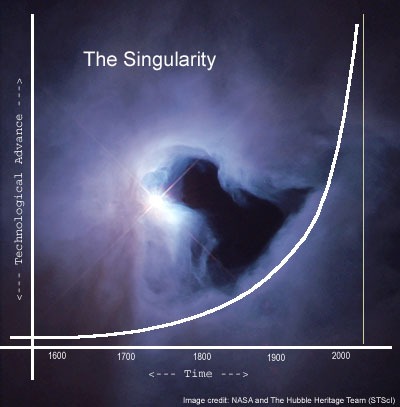
Some weeks ago we were dealing with “faith and science” in my class. For a few days I was carrying around a copy of a big, fat book by inventor and futurist Ray Kurzweil: The Singularity Is Near.
“The singularity” is Kurzweil’s name for a moment coming our way in the not-so-distant future when the pace of technological progress reaches a critical breakaway point. Humans and machines merge and in a sudden, ‘whoosh’ of geometric progressions we can scarcely imagine now, human life is utterly transformed.
Mostly, I find the material terrifying.
More on that in a future post; It puts me in a winter mind and I’m ready for spring. But a series of articles and ongoing news about Apple Computer in the NY Times, despite sounding dark chords that remind me of Kursweil’s vision, also have me wondering whether a much more hopeful breakaway point in human history might be approaching.
Two sprawling articles, one in late January and the second in mid February, focus on Foxconn, Apple’s main manufacturing sub-contractor. The stories have many people taking a closer look at the glossy, futuristic, seamless, Steve-Jobs-designed iPhones and iPods we carry in our pockets or purses. They take us into the very real and present world from which these objects come: a world few of us can imagine, much less comprehend. And they remind us that there are people and communities in these places to whom we ought to feel intimately connected and for whom we are, to an important degree, responsible.
Check out the first piece highlighting the manufacturing processes at Foxconn here.
And the second article focussing on the human costs of producing Apple products here.
Here are a few details from the articles that capture something of the scale and power of these new manufacturing “communities:”
Apple sold 160 million devices last year. In the last three months they recorded one of the most lucrative quarters of any corporation in history, generating $13.06 billion in profits on $46.3 billion in sales. With 43,000 U.S. workers and 20,000 overseas, Apple earned $400,00 per employee, beating Goldman Sachs, Exxon and Google.
But the story of the seamless wonder in your pocket is much bigger than that: it takes over 700,000 independent contractors to actually engineer and assemble the iPhone. And that’s where Foxconn comes in. Its 1.2 million workers scattered across the world assemble an astounding 40 percent of the world’s consumer electronics.
North of Shenzhen sits their largest campus. Commentators are calling it “Foxconn City” for want of a better name. It is a manufacturing facility with dorm-style living space for 200,000 and hundreds of more “luxurious” three-room apartments typically stuffed with 20 workers per unit. 300 guards are employed just to direct foot traffic to and from the factories to keep workers from trampling each other to death at bottlenecks.
Photo at geek.com.
Here is an example of what such concentrated industrial capacity can do:
In 2007, a mere month before the iPhone was due in stores, Steve Jobs changed his mind about the screens. It seems that though they were made of a scratch-resistant plastic, the one in Steve’s pocket got scratched anyway. “I want a glass screen and I want it perfect in six weeks,” said Steve.
Photo at Forbes.com
And so it happened. Corning, Inc. could make the glass, but there was no manufacturer in the world’s largest economy that could gear up to cut and polish all those pieces in time to ship them for assembly. By the time Apple’s execs got to China to ask them about the task, Foxconn had already started construction on a dedicated factory wing for the project. Free cut-glass samples were ready for inspection when the Apple team arrived. Battalions of engineers stood ready for orders. On-site dormitories would be available 24 hours a day for the production crunch. They got the contract, of course and a month or so later, the glass arrived in the middle of the night. 8,000 employees were awakened, fed a quick breakfast of tea and biscuits and set to work installing them in 12-hour shifts.
Image at bgr.com
The particulars of all of this have been a matter of some secrecy until very recently. The NYT pieces do us a great service: educating our imaginations about the reality of industrial culture on this planet. These are mind-numbing realities at a scale most of us in the States have not yet absorbed. It is also a scale which we are likely never to be able to match. When President Obama famously asked last year why the iPhone couldn’t be made right here, it struck me just how deep our national ignorance of the magnitude of this global industrial transformation really goes.
The articles also introduce us to some of the human beings who inhabit corners of this new landscape:
We meet Lai Xiaoodong whose youth and ambition led him on a pilgrimage to Chengdu, city of the iPad and 12 million souls. He worked in a crew among 120,000. Each day at work he was greeted by a sign which read: “Work hard on the job today or work hard to find a job tomorrow.”And so he worked, often 12 hours a day, six days a week for $22 a day. Each night he retreated to a small bedroom just big enough for a mattress, wardrobe and a desk where he obsessively played an online game called “Fight the Landlord.” He died in an Aluminum dust explosion that was 100% preventable with simple technologies that have been around for decades. His girlfriend reports that his face was partially melted away and that she was grateful that his suffering lasted days rather than weeks.
Photo at Ryan Pyle Archive
We read about workers forced to stand for hours on overtime shifts until their legs swell so much that they can hardly walk. Of thousands of employees cleaning iPhone screens with chemicals known to be poisonous. We are told that some of the exteriors of the facilities are fitted with mesh suicide nets due to a rash of attempts in 2010.
Image at fastcompany.com
My brother-in-law travels to industrial China frequently for business. I’ve never spoken with him at length about what he’s seen, but I’ve watched him go quiet when I ask about it: his face clouds over, his sentences trail off into silence. These articles helped me understand why.
—
I wanted to record my thoughts on these pieces as soon as I read them months ago, but I was too overwhelmed. So many important angles struck me at once. I’ve been meditating on them, trying to sort them out, feeling clouded over and distracted as I go through a day. If there are any itinerant preachers left out there looking for parable material, I can’t imagine better stuff. But they’d have to find a way to translate the massive scale of these stories down to individual lives: the worker carrying hopes, dreams, family obligations and very little else to the factory floor every day; the corporate officer earning a good, great or gargantuan salary, but dealing with complex pressures and burdens for which we all also, as consumers, have some level of responsibility.
Image at the blog called Siouxwire.com
But as the plot lines and character sketches for potential parables coalesced in my imagination, I was surprised to find themes of hope emerging next to brutality and pathos. Clearly we’re seeing shockingly new and rapidly evolving socio-economic structures. But might we not also be witnessing a new moment in the human story? A chapter in which our communal will, imagination and creativity are being directed in a powerful, new way toward the spiritual work of building human communities rooted in hope and love?
I want to be clear that I find most aspects of this story very disturbing. I was a middle-schooler in a Catholic school system that taught me to recognize and condemn the exploitation of workers. As a college kid I was haunted by visions of rugs made by children locked away in airless Pakistani factories and California fruits and vegetables harvested by workers sprayed with the same pesticides used to kill the pests. Most recently I am grieved, among many other examples, by the stories of Congolese children forced to work in industrial mines in horrific conditions.
Image at 1n2eastafrica.com
Nevertheless, let me try to explain why this Foxconn story has me wondering if a very powerful–and potentially humanizing– industrial “singularity” may be coming into view.
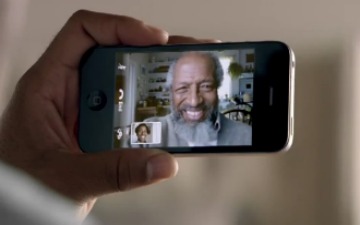
Think of Apple’s marketing campaigns. You may or may not like the look and feel of their messages yourself, but I would suggest that they have tried to associate their products with something spiritual in the nature and purpose of human beings. We dance ecstatically with their iPods, smile into one another’s beautiful faces with their iPhones, tap into our deepest creativity or devote ourselves to the pursuit of art and wisdom with their iPads.
Image at mashable.com
Image at prweb.com
What was Steve Jobs deepest legacy? He wanted the machines to conform themselves to the scale of our lives, to the appetite of our eye for beauty and elegance, to the deepest desires and longings of our hearts. In short, they were to exist for us and not the other way around. This campaign has been stunningly successful around the world. People want to use objects that are totems for their own freedom, independence, uniqueness and, yes, dignity. And they are willing to pay for them even when functionally similar products are available for much, much less.
The NYT piece makes it clear that Apple’s message is profoundly at odds with the realities of life for workers at Foxconn. And Apple knows it. For all I know, this may actually grieve some of the folks in positions of power at Apple. Across a kitchen table they would probably tell us about the colossal forces of a world market for materials and labor and the intricacies of contracts with subcontractors. About how it may take a long time for a real middle class to evolve in Asia.
But they can’t have that conversation with a global public dancing with their products. And they don’t plan to try to defend these abuses. They also don’t plan to allow the NYT or anyone else to define their brand by telling more of these compelling, human stories of exploited workers creating their beautiful, seamless objects.
So, they have decided to actually respond to the problems. A code Apple published in 2005 declared “that working conditions in Apple’s supply chain are safe, that workers are treated with respect and dignity, and that manufacturing processes are environmentally responsible.” Steps the company is taking now seem to be moving from rhetoric to reality. For the first time, the company released a list identifying many of its suppliers, in effect, taking responsibility for every part of the process involved in producing their products. They completed over 200 audits of supplier factories last year and their annual supplier responsibility reports disclose abuses we might not otherwise have know about. They show that half of the suppliers audited by Apple have violated at least one aspect of the code of conduct every year since 2007.
But this information comes to us from their own reports. One highly placed ex-Apple executive reports in the articles that “suppliers would change everything tomorrow if Apple told them they didn’t have another choice.” It will be hard for Apple not take meaningful action now that they have publicly started down this road.
Will those of us who use these products care enough to let them know we demand they walk down this road? Will that road lead to beautiful, functional electronic products produced by people who are treated with dignity and are being offered futures consistent with the kinds of values the company celebrates in its advertising campaigns? How long will that take?
What if what we are seeing is the beginning of a new breakaway point in global consciousness about workers and products? What if this is the beginning of a new ethos in consumer culture in which we realize that we want to consume–and are willing to pay for– products that dignify users and makers? What if what we are seeing is an emerging industrial playing field where more bright lights and cameras mean no more room for industrial criminals to hide?
If it is true, as one international captain of industry put it, that “every company wants to be Apple today” these pieces in the NYT may be pointing to a transformational moment in human history.
—
The Foxconn website is weirdly spare. It features a large photo of a group of young employees leaping into the air.
It is a chilling image. I’d just read about their factories when I first saw it and I found the juxtaposition of the “leap for joy” message and the grim realities of workers’ lives deeply disturbing. But after looking at it for a few more minutes, I could see how they’d gotten the shot: someone had thrown something, a frisbee perhaps, and had instructed them all to look at it and jump to catch it just before it entered the frame. Or perhaps it was simply edited out.
At any rate, it is a phony and we can feel it. The image takes its place in a long and terrible line of propagandistic attempts on the part of management and capital to lie about the happy, fulfilled lives of laborers.
Here’s hoping that these NYT stories prefigure a new climate of resistance to these kinds of lies and even, perhaps, a new era of genuine universal aspiration to square our spiritual language and imagery about the value and dignity of persons with the reality of the individual and communal circumstances of workers.
Several weeks ago the NYT reported that monthly wages at Foxconn will rise by an average of $400 this year.
It takes a little over an hour by car from St. Louis and then just a few minutes of steady walking to find yourself hidden away in an Ozark wilderness.
Photo James Burton
And if you catch a perfect February day like today, you’ll be warm and comfortable enough to stop for as long you like to be dazzled by color and texture only a late, Missouri winter can deliver.
Sparkling, slow, sandy-bottomed, spring-fed creeks wind through clefts in the hills.
Photo James Burton
High above them in the sun against an open blue sky, stand ancient knobs with polished granite benches facing south, waiting for pilgrims carrying hard-boiled eggs and oranges.
Photo James Burton
And when you’re in amid the trees neither high nor low, no leaves distract you from the simple glories of tree bark: polished like muscled-granite on Ironwood saplings, alternately grooved in purple and gray on massive Red Oaks downed by storms and, in the case of Shortleaf Pines, racked around trunks in cubed geometry like scales on the leg of a dinosaur.
There are no words for the kind of refreshment I get from a day like this. And yet, days go by and I forget–even come to doubt– this kind of grace. Until, in something like an act of faith, I take another hike.
Winter came back at last this afternoon in fat flakes. Heavy enough to stay down and pile up. Wet enough to stick to everything. But I couldn’t look at it much today. As night came on, I couldn’t even think much, about anything. Didn’t know what I knew. Just wanted to shake off the cold and wet, come indoors. Though we haven’t had much winter this year, it was still a late winter night in my soul.
Then the three-year old boy next store came to see us, in a shaggy moonsuit. He gave us one full- faced smile before he went on ploughing thick frosting off all the birthday cakes on our porch rail.
I’m not going back out there tonight. And I still feel thick and slow. But I am glad, again, for winter.
The title of this post comes from a great joke in Woody Allen’s “Annie Hall.” Take a look at the scene here.
Photo at tbnranch.com
Woody Allen uses the joke to make a point about relationships and that’s where I want to end up, but let’s start with eggs.
Driving into work this morning I heard a story on NPR’s Morning Edition about mortal enemies fighting, nearly to the death, over eggs. Over Industrial Egg farming to be specific. Listen to the story or read it here.
Gene Gregory and Wayne Pacelle were bitter adversaries: one the President of United Egg Producers the other the President of the Humane Society. We’re talking battling titans! And the war between them had gone on for years. Totally opposite visions of the issue and utterly entrenched rhetoric. Absolutely incompatible bottom lines. And on top of all that, it was personal.
And yet, these days the two are lobbying Congress together to reform the regulations on egg production.
The thaw began with a message from Gregory to Pacelle through an intermediary: “Can the two of us just talk?” They did.
Pacelle says in the piece: “We could fight the United Egg Producers for another 10 or 15 years, and spend millions of dollars on both sides. But the other option is, we could sit down together and figure out a pathway that’s good for industry and better for animals.”
The conversation lead to, you guessed it, a real relationship:
“I found him to be a man of his word,” Gregory now says of Pacelle.
“He helped me understand the daily struggles farmers go through,” Pacelle says of Gregory.
I was smiling in that last stretch to school. We can talk. We can get beyond what looks like hopeless ideological polarization to address real problems with workable strategies. I’m not sure who the intermediaries will be. And we may have to deal with our own and other’s delusions along the way.
But I do know one thing: right now, we need the eggs.
I finally did get around, as promised, to reading the article my friend shared with me about the mythology of “Star Wars.”
In the piece, Liel Leibovitz makes the case that George Lucas does indeed take his cue from close study of Joseph Campbell and intentionally sets out to encode the grand generalities of all religions in his movies. As I mention in my post, I actually don’t think he takes that stuff too seriously at all in the first three movies.
But his point resonates a bit with what I said about the second three: we get a vague, culture-less “spirituality” in which the battle between good and evil is flat, facile and easy. He says Lucas makes the same mistake in his new film about the Tuskegee Airman: it’s all cool battles and grand drama with no attempt to get at the real intricacies of race and history.
We don’t need more “transcendental humanism,” he says in conclusion. We’ve got to say more than “follow your bliss.” It has to be “both grander and more specific.”
That may be true, but I think putting those two modes together in religious practice is actually quite a trick.
Here are two observations about how religion seems to “work:”
The first point:
On the one hand, it seems that religion does rest on grand narrative quite a bit. In fact, I think human communities naturally, that is to say biologically and neurologically, assemble and promulgate broad narratives and iconic images and that individual people naturally lap them up and lean on them pretty heavily as they navigate their lives. And I’m not talking about those other, “unenlightened” types. I’m talking about myself. I’ve reflected a lot about the stories and images that have shaped me: both the ones that are simply “there” and the ones I cling to and sustain. And I’ve talked to my students about their own. Listening to call-in shows on NPR, watching the commentators on TV news, trying to stay focussed on a Sunday homily or simply sharing life with my neighbors, I see and feel their power and influence everywhere. People are saying they’ve thought a claim through and so hold to reasoned convictions, but most often I hear the myth being spooled out without much of the nuance of of lived experience.
John Gast's "American Progress"
Most of the time these days, I’m standing back, listening to them and trying to do two things: First, trying to measure their myths, aphorisms and images against the complexity and nuance of life as I see it; and second, trying to maintain enough humility to offer them the respect they deserve since I suspect that their actual inner life is much richer and more nuanced than they are able to articulate.
But every now and again I hear a different storyteller’s voice, someone offering me other kinds of images. There is silence next to whatever story they tell. Typically, some lengthy pauses. The images they conjure up are full of specific times and places: objects with lots of texture, scenes with characters that vanish into shadows. Outrageous things happen in their stories and remain unexplained, though somehow still honored for whatever they signify. Sometimes they do have a few “facts” and even a passionate perspective on where the facts lead. But the arrow of their opinion is flying through air they’ve acknowledged is thick with the vast complexity of what remains unknown or unexamined.
As I’ve shared in an earlier post, my Dad is such a person for me. So is my brother. And my wife. And several of my colleagues. Some of them are quite religious, some devout. Others only marginally so. A few are comfortable with the term “spiritual” –one Leibovitz finds distastefully vague–, but can no longer make publicly “religious” statements. None of them, though, would ever advertise that fact in a way which drew attention to themselves or suggested a criticism of someone else who might be listening. I am much better than I used to be about appreciating the wisdom of these people in my life. They are good spiritual teachers.
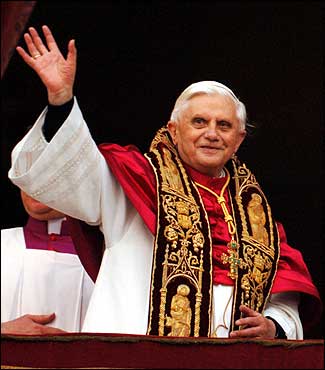
Once in a great while, I encounter someone like this who is at the same time a publicly religious person. A designated spiritual teacher. A person of office who is required to represent the images and narratives of orthodoxy and yet still carries them lightly, with open palms, open heart and an open, unguarded mind. A priest at our school comes to mind. Benedict XVI. The Dali Lama. Aware of the bedroom communities of the faithful whom they know are listening because of their office, these teachers give voice to the grand narratives of their tradition. They hold up the holy icons for contemplation. Their message offers both comfort and challenge.
But at the same time, they seem to know that people like me are out there , too. I hear nuance and humility in the way they tell the grand narrative. Their posture and quality of presence tells me that iconic images are for them a way to enter more deeply into the mystery and surprise of real experience. A little confession: It helps to read their books where they really let their hair down!
Here is the second point:
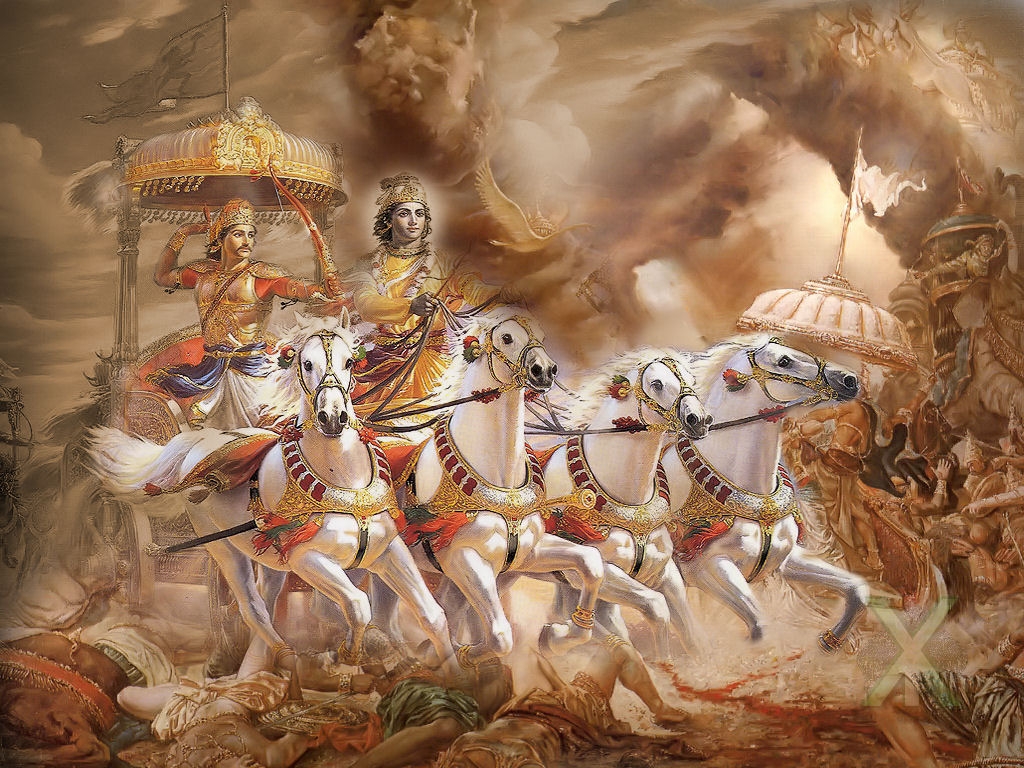
Like every species and population on the planet shaped by millions of years of adaptation in exchange with countless others, religion itself has evolved in an organic way. The world’s great religious traditions are ancient on our human scale. Unlike the overnight construction of Star Wars mythology or Scientology’s Psycho-Cybernetics, these traditions have had time to absorb, condense and reflect vast stretches of the nuances of human life. When myths and icons emerge from all that nuance into particular traditions and take up places of honor in a community, they are rightly regarded with reverence for all the experience and consciousness they encode.
Krishna and Arjuna in the Bagavad Gita; Image at reputiatedbrilliance.blogspot. com
That doesn’t mean, of course, that they will automatically produce wisdom and virtue in the faithful. In some circumstances they will even misfire as ignorance and hate: organic counter-patterns with their own evolutionary genesis and function. And sometimes they will strike those of us who are more rational and scientific as quaint, anachronistic or flat.
Christ, Pantocrator 8th century Byzantine Mosaic
But that is where religious training, reflection, study and leadership have to come in. Very few will have the time or inclination to do this “adult-level” work. But those who do it have a dual responsibility: For the vast community of the faithful for whom the grand narrative and the iconic images will remain mostly concrete and literal, they have to find ways to use the poetry of these forms to motivate and inspire people to be faithful in the day to day circumstances of their lives.
Bishop Oscar Romero Image at Creighton.edu
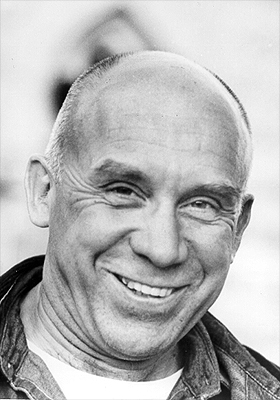
But for the relatively small but very powerful group of sophisticated–and usually marginal–members of the community, leaders have to find ways to invite them behind the external forms into the vast, experiential, nuanced truth encoded within the forms. And they have to do this in such a way that they don’t encourage them to reduce sacred forms to mere practical vehicles whose only purpose is to convey the “real” but abstract truths. Nor can they allow them to think of themselves as holier or superior to ordinary folks just because they’ve had a look “behind the curtain.”
Thomas Merton Image from W.L. Lyons Library
I’ve been trying to listen and learn from these kinds of leaders for many years. Trying to move back and forth between the grand narrative and iconic images to the density, chaos and wonder of nuanced experience and back again. I’d like to learn to help others walk between them. But the truth is I still find it very daunting.
So when Leibovitz says in his critique of “Star Wars” that what we need is a religion that is “both grander and more specific,” I agree.
There’s something so joyful and comforting about a birthday celebration when it goes right. Whether its a little person with a face hovering just above a cake in candlelight or a big person collecting cards and good wishes all day long, it is a wonderful thing to see them basking in the glow of our affection. Here’s hoping they will believe us.
Have you noticed how the people who make a big deal out of birthdays tend to be the best people you know? I will try to celebrate a birthday for someone today, but she is the real, world-class birthday celebrator. She’s so good at it that she can have a good time on her own birthday knowing she’s earned it by celebrating everyone else’s so well.
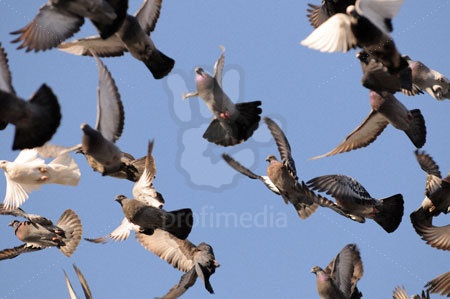
Just a quick question I was asking myself driving to work today: “Why are pigeons so pretty?”
I know, I know, they’re the “flying rats” of cities all over the planet. But look at their markings: from white to slate purple and in every mottled and striped variety in between, pigeons are showy. When I lived in the Bronx in the early 80’s and saw a shoal of them rise up all at once in all their varied glory and wheel together into the air against an endless landscape of brick and asphalt, my heart skipped a beat. A little natural glory came in pretty handy back in those days, bub.
Image at Profimedia
But why all that variety?
Almost every species shows relatively little distinction between individuals. Of course those subtle differences are absolutely loaded with evolutionary significance in the reproductive crucible, but from flies to foxes there’s not much drama in the differences between one individual and another of the same gender.
Dogs are a very notable exception, probably the most spectacular exception to the rule on the planet. Lots of new films and books are being written about why and it is a very cool story. Cats are right on their heels. And both are in intimate contact with us. Interesting.
Image at Voice Tribune
And, of course, we members of the species Homo Sapiens Sapiens are pretty remarkable exceptions as well: our sizes, skin tones, eye colors, and hair types give us some dramatic room to maneuver. Lots of ways to be be attractive as a human being.
Does anything connect these stories? Pigeons are really “Rock Doves.” They used to nest in the cliffs and obviously made the jump quite readily to our skyscapers and City Halls. Is that why they went viral as a species? They eat what we eat. I guess they eat about anything. Is all that variety in markings a result of being a global species? Is that why we exhibit all of our own wonderful variety? Does every species we decide to live with start showing off?
Just a few questions I was asking on a commute. Meanwhile, I’ll take any spiritual thrill or consolation I can get from any species, anywhere.
A friend shared an article about “Star Wars” with me this morning. He said it had to do with the inadequacies of the mythology of ‘the force’ in the films.
Usually I’m in a “listen first” mode when somebody comes to see me in my office. But this time within a few seconds I was rushing through a speech that sounded as if I’d been rehearsing it for weeks. The pitch and volume of my voice rose as some argument I was making gathered momentum. Was my pulse even racing?
…
I haven’t read the article yet, but I thought it might be a good exercise to try to get a bit of whatever set me off out in the open. Maybe figure out where all that energy came from. I’ll let you know what I think about the article after I get this out of my system.
Image from Wikipedia
I’ve tried to capture for my three grown sons what it was like to see the first Star Wars film as a senior in high school in the summer of 1977. A quirky, intellectual pal of mine had seen it and was actually laughing out loud when he said something like: “You’ve just got to see this thing! It’s like nothing you’ve ever seen. It is a total blast! Just trust me!” My only expectation was for fun. And did the movie ever deliver!
I was giddy on the parking lot afterward. Yes, the special effects had been jaw-dropping. There was real surprise when the rebel destroyer came through the first frames, glowing with those lustrous, pale, lunar-dust colors and eye-poppingly intricate futuristic, industrial detail. And when the Imperial Cruiser came right behind in pursuit and the shot went on and on and on, there were audible gasps in the theater. I felt like something new was happening, not just in movies, but with machines and people and culture…and me!
But it wasn’t just the visual effects. In fact, it wasn’t even mostly that. It was the romance! Han Solo was a smug but endearing swashbuckler with the wit of a James Garner cowboy and Cary Grant’s good looks and humor. Leia was a totally irresistible combination of sassy Bogart-broad and vulnerable, doe-eyed princess, melting Luke’s heart with “Help me Obi Wan Kenobi, you’re my only hope!” one minute and lashing out at her bumbling would-be rescuers with a withering “Would somebody get this walking carpet out of my way!” the next. And when young Luke Skywalker stepped out at dusk and gazed off at that double-sunset horizon, I was staring out though his eyes at the limitless possibilities and adventures that lay just ahead, but still out of reach, for me.
Image from Softpedia
But the main point is that this movie–and the next two– were a lot of fun to watch. The effects and visuals got better and better of course: Degaba was by far my favorite setting but you had to love the forests of Endor on flying scooters. Given the primary mandate for fun, the overall narrative arc of the trilogy and the sub-plot lines couldn’t have been more traditional or more satisfying: the old passing wisdom and vision to the young, desire and altruism dancing apart then coming together again as true and generous love, the battle between good and evil literally set forth in black and white. Luke’s temptation to power and eeevil was full of drama, but the outcome was never in doubt. The characters and the story were the sustaining force of these movies.
And as for “The Force” itself? Again, it was all about the fun! Settling into our seats when those next two movies at last came out, none of us were waiting for a movie about religion, spirituality or “meaning.” This was going to be a blast! These were new kinds of movies laid over good old-fashioned serial melodrama. “The Force” was a great, campy way to to give these sci-fi knights some really cool powers and plenty of occasions for high-sounding speeches. Yes, Joseph Campbell did cast a spell on many of us about how the films mapped out “the hero’s journey” through the “darkside” within us all. I entertained quite a few of my theology students over the years with light saber sounds and my Yoda impersonation: “Oh you will be, you WILL be!”
But we’re talking broad, broad “spiritual” territory here! A landscape for entertainment and escape much more than a context for serious spiritual reflection.
Then we all waited for the next three films and the chance to bring our own kids to the theater for another 10 years or so of more epic fun. What we got was an epic fiasco.
Image at blogs.starwars.com
And this, I think, is what set me off when my friend came in with the article. (I still haven’t read it!)
I think there are whole websites dedicated to ripping these films and I won’t try to match the real cultural comedians out there in cyberspace. My sons tell me some of them are hilarious and I know you can see some of their rants on You Tube.
But here is the short version of my own rant: How, in the name of heaven and earth, did the people associated with these films take this legacy and turn it into such overblown, nearly unwatchable drivel? What were they thinking?
Here is my theory: They were thinking far, far too much about “The Force.” They forgot that it was all for fun! They forgot the Force was just a device to create a little extra magic around our beloved heroes. And they actually began to treat it as if it referred to something genuinely religious or spiritual! By the time they sucked us into this mess and realized how god-awful it was, they tried to bail themselves out in the second movie with scenes so tech-loaded they made your head spin.
Now I’m a big Liam Neeson fan and he does battle gamely to bring some dignity and interest to the role of Qui Gon. But that’s the problem! So much solemnity… and about what?! “Mitochlorians?” You’ll have to check my spelling, but the first film has some mumbo jumbo about how your degree of power with the force depends upon these microscopic beings that live in your bloodstream and somehow…. I can’t go on. It’s too boring to waste another sentence trying to explain whatever it was they were trying to say.
Yes, there’s a vaguely zen-like reference to training and practice and that’s fine. But the Degaba sequences were a thousand times better, much more fun and freighted with no pretense about religion. And while I’m all for seeing some awareness about the dangers of anger and violence taking over your life in popular movies, sober explorations of those those issues are best left to the traditions and practices that are worked out one ordinary day at time in the presence of a loving community and your own steady, quirky, flawed, funny and real Yoda. I will admit the Yoda fight scene did make laugh.
Let me end with some good karma. The first three Star Wars films do actually celebrate something genuinely spiritual: the glorious fun and reenergizing, restorative power of storytelling.








































 Spirit in the World